
In years past, I’ve always been hesitant to engage in Freudian analysis. It is rare that I find an occasion where I feel that Sigmund Freud’s theories of repressed sexuality and unconscious urges to be applicable to a client, real or otherwise. Oswald “Oz” Cobb, as portrayed by actor Colin Farrell in 2024’s The Penguin, is one of the exceptions to that sentiment. Lauren LeFranc’s show on the titular character portrays a Gotham mobster dominated by an Oedipus complex that motivates his every move in his rise through the criminal underworld.
For those unfamiliar with the series, The Penguin was created by Lauren LeFranc and Matt Reeves as a spin-off series for 2022’s The Batman film. Oswald Cobb, otherwise referred to as “Oz Cobb” or “the Penguin” in the context of both The Penguin and The Batman, is an adaptation of Batman comics character Oswald Cobblepot. The comic character was created by Bill Finger and Bob Kane in 1941 for Detective Comics #58 as one of the Batman’s first eccentric adversaries. Since his inception, the character has become a staple aspect of the ever-expanding Batman mythos and has been featured in a variety of adaptations. Matt Reeves’ The Batman featured a wholly unique iteration of the Penguin relative to previous versions. Portrayed by Irish actor Collin Farrell, Reeves’ Oz Cobb is heavily inspired by Italian mobsters from mass media such as Tony Soprano from 1999’s The Sopranos. The character is often integrated in a deeply disturbed world, and Matt Reeves’ take on the Penguin is no exception. Gotham City is a psychologically disturbed city, one in which traumatized characters like the Batman and the Joker run amok. The creative storytelling of the mythos is based in recurring themes of trauma, psychological disturbance, and maltreatment. In 2024’s The Penguin, these themes are brought to the forefront and further integrated into the Oz Cobb character than an adaptation before it. This is most aptly seen in Oswald’s unhealthy relationship with his mother, Francis.
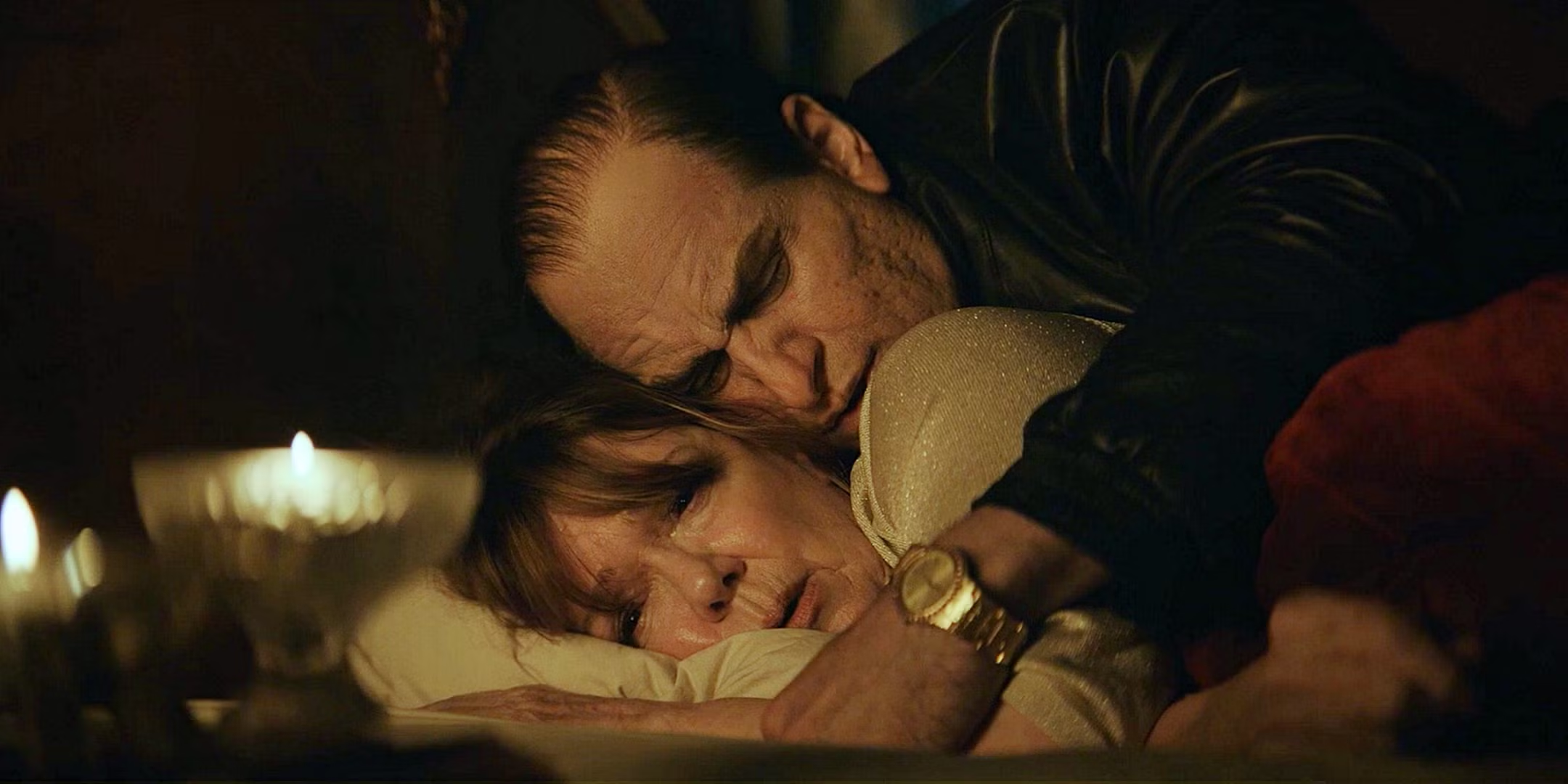
We are first introduced to Francis Cobb in Episode 1 of the series. Francis, portrayed by Dierdre O’Connell, is shown to be suffering with Lewy body dementia, a progressive brain disease that has negatively affected her memory. Oz has kept her in a small house on the outskirts of a city, a place that he tells his assistant, Victor, is intended to keep her safe from the prying eyes of those that might intend to do him harm. Oz lives in a dangerous world, one in which personal relations can be easily exploited. For that reason, Oz lets the world believe his mother is dead. Through these actions, it becomes apparent the level of care he has for his mother. In his regular visits to see her throughout the season, we see him often promise how he will climb to the top of Gotham’s criminal empire to attain enough money and resources to properly care for her. Many of his competitors, rivals, and enemies in the series, like Sofia Falcone and Sal Maroni, unknowingly question if Oz cares about anything more than himself. Nearly all of his actions and betrayals seem to be purely self-serving in nature on the surface, leading many, including the audience, to conclude early-on that Oz cares about nothing more than his own meteoric rise to the top. These moments of vulnerability with his mother, where they dance in the living room to his mother’s favorite tunes as he promises a life of luxury for her, reveal that there is far more to his motivations that monetary value alone.
“You’re my big, strong bull of a boy.” -Francis Cobb, Episode 1.
Oz Cobb never really knew his father. He was raised by his mother, who worked as an accountant for a local crime boss named Rex Calabrese. In the first episode of the series, Oz discloses in a line of dialogue that he would love nothing more than to be viewed as Rex was. He wants to be adored by the public, a seeming hero of the people. Rex represents his role model for success. Rex also had a special relationship with Oz’s mother. Francis greatly respected Rex Calabrese, and hoped her sons would similarly succeed in the business of criminality. There are even hints that perhaps Rex and Francis shared an intimate, sexual relationship. Outside of Rex, who was viewed as a personal hero for the way he was respected by the people of his community and loved by his mother, Oz never cared for any other male figure. He was rejective of his own father, who he repeatedly insisted he was nothing like. Oz held a deep resentment for his absent father and the lack of care he provided for his mother. Oz shows a similar distrust and disdain for other male figures that hold power over him. During The Batman, which takes just prior to the events of The Penguin, Oz is shown to be working under Carmine Falcone, the most prolific mobster in Gotham City. Following Carmine’s death at the end of the film, Oz shows his clear hatred and resentment over the deceased mobster. In the opening of The Penguin, Oz kills Alberto Falcone, the son of his former employer, after Alberto assumes his father’s role over Oz. On repeated occasions, we are shown the resentment Oz feels towards male figures in power. In the final episode of The Penguin, during a flashback sequence conservation between Rex and Francis, Rex likens being a crime boss with being a father. He states that this positioning of power reminds many of those that work beneath him of their absent fathers, thus inspiring great loyalty. He further notes that such an approach would not work on Oz, as Oz is not looking for a father, only the love of his mother. If being at the top of being a criminal organization is akin to being the father of the family, and thus the husband of the mother, it is unsurprising that Oz would resent men in power when we examine the relationship through a Freudian lens.
Sigmund Freud’s Oedipus complex was named after the story of Oedipus Rex, a Greek tragedy in which a man unknowingly killed his father and slept with his own mother. Freud’s belief was that men unconsciously contain some basis of an Oedipus complex because boys develop a sexual desire for the mother, and thus form a resentment of the father. In posturing himself as a protector and caretaker of his mother, he takes on the role that his father would have filled had he been present. In such a role, he developed negative attitudes toward men in power that took on paternal roles. Through this relationship, Oz’s views towards men in power align with what we might expect from a man with an unconscious Oedipus complex.
In addition to men in positions of existing power, these feelings of jealousy similarly apply to male figures he views as rivals for his mother’s affections. Growing up, Oz had two brothers: Jack and Benny. Jack, Oz’s older brother, was more trusted by his mother when it pertained to responsibility. When Francis needed to deliver something to Rex, Jack was the one entrusted to make such a delivery. Benny, Oz’s younger brother, was able to bring out Francis’ more maternal side. Whereas Oz could not get Francis to take her attention away from work in order to spend time with him, Benny could seemingly do so without effort. In his jealousy of the relationships his brothers had with their mother, and in an effort to have such a relationship with his mother himself, Oz killed his brothers as just a child. These events were detailed in the seventh episode of The Penguin, where Oz shows limited remorse as he leaves his brothers to drown so he can watch a movie on the couch with his mother. This secret is never revealed to Francis by Oz, as he has no regrets of the actions he take to win his mother’s affection. Episode 3 of the series shows that Oz is willing to betray anyone for his own goals, and will do so without regret. The first job he had in the criminal underworld was as a lowly personal driver for Sofia Falcone, the favored daughter of Carmine Falcone. Oz was quick to sell out Sofia to her father when an opportunity arose, ensuring that Sofia would be cast out of the family and that he would rise in power through the organization. When asked by Sofia in Episode 3 if he regretted his actions against her, Oz stated that, while he felt bad, he regretted nothing. Oz felt that his actions led to his own personal success, something that would not have occurred had he not acted against Sofia. This event speaks volumes about Oz’s attitudes toward betrayal, attitudes that apply to his own brothers. The Penguin does not feel guilt over hurting others if his actions result in the attainment of his own goals, goals that often involve the attainment of love and pride from his mother. The very reason why Oz ever enters the world of criminality is because it is a pathway to success that Francis whole-heartedly condones and participates in. As a former employer of Rex Calabrese, Francis herself was steeped in the world of criminal behavior when Oz was growing up. To Oz, his mother’s actions provide a benchmark for him to follow.

Following the deaths of his brothers, Oz swears to his mother that he will make something of himself in order to provide her with the lifestyle she deserves. This motivation is hammered in through dialogue throughout the series, but the origins of such feelings are most clearly shown in a flashback sequence in Episode 8. Francis, after the untimely deaths of her sons, dresses up in formal attire and takes Oz to a nice establishment in the better part of Crown’s Point, Gotham City. While there, Oz looks at his mother and makes his promise to ensure her a life of luxury through his own criminal enterprise. In all his greatest moments of vulnerability and desperation through the events of the series, triumphs and setbacks alike, he always returns to his mother’s side to reiterate his promises of a better life for them. Oz is desperate to take on a caring role. While such a relationship can be viewed as a son loyally looking after his ailing mother, the dialogue, scenery, and body languages suggest a more unconscious, sexual drive. When a young Francis emerges from her room in formal attire during the flashback in Episode 8, Oswald, as a child, looks her up and down as if he would a sexual partner. He regularly refers to their individual time together as a child as “dates,” and is quick to feel jealousy at the prospect of losing that alone time with his mother. The relationship is high in physical intimacy, as Oswald shows a constant need for physical touch. When conversing with Rex in Episode 8’s flashback sequence, a young Francis refers to her son as “needy.” While I do not believe there is any subtext to suggest a truly sexually relationship between the two, or even a truly conscious desire on Oswald’s part, I do believe that their intimate engagements imply an unconscious Oedipus complex for young Oz Cobb. This Oedipus complex sinks further beneath the surface of unconsciousness as Oz ages into the character we follow through the series, but never fades from the character’s drives, as evident from the events and themes of the series.
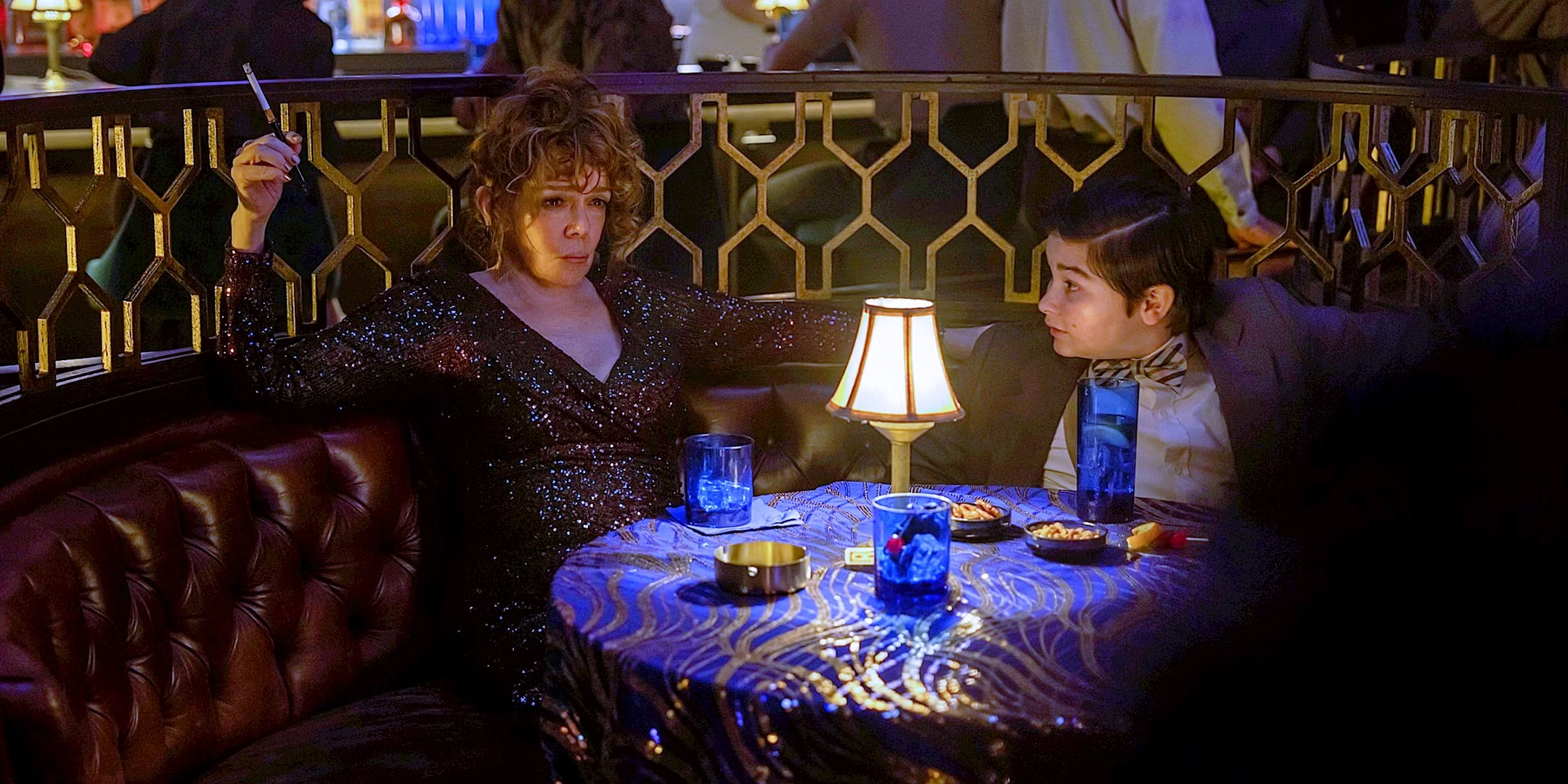
Approval is a recurring theme in this series. Oz is desperate for his mother’s approval. He keeps her regularly updated on his overarching plans, methods, and triumphs, while downplaying any setbacks he experiences. Francis is quick to reaffirm her son when he succeeds, but is just as quick to chastise or insult him when he falls short. Francis will often play on Oz’s feelings of guilt in an effort to further push him along. This unhealthy dependency on his mother’s approval keeps Oz going through the show, as he never sees through how his mother’s disdain for his lack of success harms him. Her cold and cutting disapproval only pushes Oz further towards his goals. Oz builds not only his motivations around building a safe and luxurious life around his mother to make her proud, but his methods as well. As a former associate of Rex Calabrese, Francis is not unfamiliar with criminal dealings. Not only that, but she is actively approving of such a pathway to luxury. She believes in merciless dealings with rivals and is quick to suggest a brutal method of approach in Oz’s rise to the top. In doing so, she ensures that Oz continues along his journey of brutally climbing his way up through Gotham’s criminal empire, something Oz happily does for his mother’s happiness. Every aspect of Oz’s identity is based around his mother’s approval, from his motives to his methods. It is essential to Oz that he not only has her approval, but that she knows it is him who is providing for her. Part of Francis’ Lewy body dementia results in her easily being confused about her whereabouts and temporality. When Francis is forcibly moved out of her house and back into Crown’s Point, the worst neighborhood in Gotham, by Oz in order to keep her safe from rising tensions in the criminal underworld, Francis is understandably upset at Oz for the circumstances. With the loss of power across the neighborhood, Francis becomes desperate for good news. As Victor lies to Francis that Jack went to go fix the power, Oz snaps back that Jack is gone. Oz needs Francis to know that he will fix everything, not anyone else, especially her deceased older son. Even in death, Oz feels jealousy at the prospect that Francis would look at any other male figure favorably for love and care. One of the great twists of the series occurs in Episode 7 when Francis is taken captive by Sofia Falcone, now calling herself Sofia Gigante, to be used as a hostage against Oswald. In their meeting, Francis not only reveals her yearning to see rivals such as Sofia die by Oz’s hand, but some of the secrets she has been keeping as well. A subsequent meeting with a psychologist on Sofia’s staff reveals to Sofia, and the audience, that Francis was knowledgeable of her son’s deaths at Oswald’s hands. A flashback in the beginning of Episode 8 between young Francis and Rex Calabrese details the distraught Francis struggling with what to do in the aftermath of Jack and Benny’s death. She reveals that she hates Oz for what he did, and wants Rex to kill “the devil.” When she took Oz to that dance as a child, she intended to have him killed until he swore to protect her for the rest of his life. She agrees to such an arrangement and chooses to be complicit in the murders of Jack and Benny, but never tells Oz of her knowledge. When these secrets are revealed to Oz by Sofia in front of Francis, the titular character is floored by the revelation. Francis is released by Sofia, and Oz’s mother declares how much she has always hated her son before stabbing him in the gut. The exertion ultimately gives her a stroke, and Oz flees the scene with his mother. Despite the revelation of his mother’s hatred, Oz still spends the remainder of the series finale attempting to kill Sofia to make his mother proud. By the end of the series finale, Francis is ultimately left in a vegetative state by the stroke. Oz cries over her body, begging for approval and a statement of pride despite her inability to respond. As the episode draws to a close, Oz places her in a luxury penthouse overlooking the city to finally make her dreams come true, never giving up on the prospect that his mother will someday recover and forgive him. The irony of the situation is that, in Episode 7, Francis begged that Oz kill her should she ever fall into a vegetative state, as that was not a life she wanted. In contradicting her desperate wishes, Oz shows the audience that his need for approval far outweighs the desires of his mother. Maternal approval is the backbone of Oz’s very existence, and is integral to his ability to proceed with his life. Every motivation and methodology he has is based in his belief that it will maximize his mother’s love and ensure further attention. Such desperation is far more indicative of a psychological need and a deeply routed Oedipus complex that it is of a simple want for a mother’s approval.
My beautiful boy.” -Eve Karlo, Episode 8.
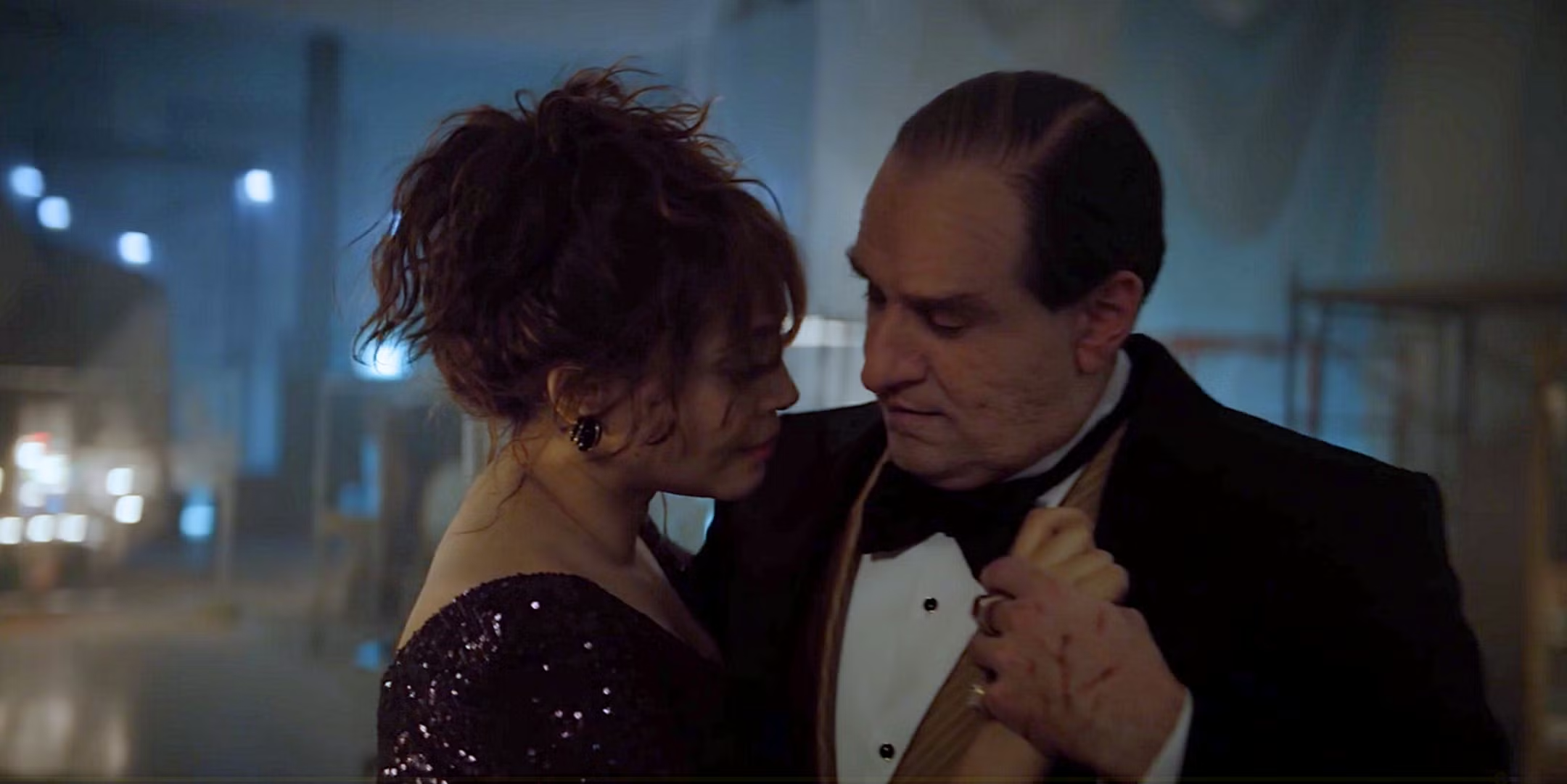
Oz’s relationships with women are extremely limited outside of his mother. His most significant relationship is with Eve Karlo, portrayed by Carmen Ejogo. Eve is Oz’s girlfriend through most of the series, although the relationship is often portrayed as complicated. Eve is also the employer of a number of sex-workers in Gotham, and is often in the employment of Oz at his nightclub. Their relationship is described by Eve as much as professional as it is personal when she is asked by Sofia in Episode 7. When we are first introduced to Eve in the first episode, Oz is at her door asking her to be his alibi after he commits a murder. In the following episodes, she visits Oz’s apartment for parties, celebrations, and meetings. When Oz was pushing a new drug on the streets, Eve and her employees were helping as dealers. Their unique relationship parallels the relationship between Francis and Rex in their youth. Oz and Rex are criminal bosses, attempting to climb higher up the chain of the underworld. Eve and Francis are their professional accomplices, helping where they can to ensure a mutually beneficial rise. While Rex and Francis’ relationship is only implied to be sexual, Oz and Eve’s relationship is explicitly sexual. When we consider the Oz’s unconscious Oedipus complex, it becomes unsurprising that he would seek a partner that reminds him of his mother. Eve has a relationship with him that not only parallels the relationship between his mother and his idol, but she also takes on an affectionate role in their personal relationship. She offers care and affirmation when he needs it, and is seemingly approving of his lethal methods. This suggestive relationship acting as a substitute for Oz’s own sexual desires for his mothers is only expounded upon in the closing scene of the finale. As Oz leaves his unresponsive mother in her new penthouse, he descends down the stairs to find Eve waiting for him on the lower level of the residence. The room has been remade to look like the dance floor his mother danced with him on. A record player plays the same tune that was often played in his mother’s home. Eve herself stands, arms outstretched to Oz, in the same dress his mother wore to their dance after Jack and Benny died. As they slow dance, Oz asks Eve to tell him that she loves him and that she’s proud of him. After Eve does so, Oz refers to Eve as “Ma,” and talks to her as if she is his mother. Eve further sells that Oz is not only in need of his mother’s approval, but also of her sexual love, with Eve serving as a substitute for his affections.
Oz’s Oedipus complex aligns perfectly with the greater themes of the show and the further expanding web of Matt Reeves’ Batman projects. Like many adaptations of the Batman mythos, The Penguin places an emphasis on the psychological. Themes of motivation, desire, repressed trauma, and deep disturbance are abundant. Each character in the series struggles with a different dysfunction caused by a psychological disturbance. Francis shown in the last episode to be tormented by the dissonance resulting from loving Oz and hating Oz for what he has done “for” her over his life. Sofia, Oz’s primary rival and antagonist in the series, struggles with the trauma of having spent a decade in Arkham Asylum for a crime she did not commit. The brutal treatment done to her by such a corrupt institution, and her family’s own complicity in putting her in such a torment, is a deep pain that both pushes her forward and holds her back. Oz’s unresolved, unconscious feelings for his mother is a strength and a weakness. It pushes him towards greatness as he seeks to earn his mother’s love and approval, while still holding him back. Oz is entangled in an unhealthy relationship as a consequence of his own repressed childhood desires. The fragility of the life he has chosen to pursue on behalf of these feelings for his mother has left him with the perspective that family is both a strength and weakness for a man in his position. Such a dissonance has led him to pursue terrible choices, such as the murder of those that are family and the maltreatment of his own mother as the episode closes. As Lauren LeFranc and Matt Reeves pursue themes of unresolved trauma and their negative outcomes through their characters, the Penguin aligns perfectly with this overarching theme.

References
Badasie, C. (2024a). Francis and Cobb at the Dance. CBR. Retrieved November 12, 2024, from https://www.cbr.com/the-penguin-deirdre-oconnell-oz-mother-relationship/.
Badasie, C. (2024b). Francis in Penthouse. CBR. Retrieved November 12, 2024, from https://www.cbr.com/the-penguin-deirdre-oconnell-oz-mother-relationship/.
Fang, S. (2024). Oswald and Francis. CBR. Retrieved November 12, 2024, from https://www.cbr.com/colin-farrell-the-penguin-finale-oz-mom-cries/.
Lassner, E. (2024). The Penguin Header Image. Hollywood Reporter. Retrieved November 12, 2024, from https://www.hollywoodreporter.com/tv/tv-news/watch-the-penguin-batman-spinoff-online-1236005387/.
Patton, J. (2024). Oz and Eve. CBR. Retrieved November 12, 2024, from https://www.cbr.com/the-penguin-episode-8-season-finale-review/https://www.cbr.com/the-penguin-episode-8-season-finale-review/.
Santos-Longhurst, A. (2019, January 23). Oedipus complex meaning and Overview. Healthline. https://www.healthline.com/health/oedipus-complex#symptoms
Zalben, A. (2024). Oz, Jack, and Benny. Comic Book Club. Retrieved November 12, 2024, from https://comicbookclublive.com/2024/11/03/the-penguin-oswald-brothers-die-jack-benny/.
 Psych Effect
Leave a comment